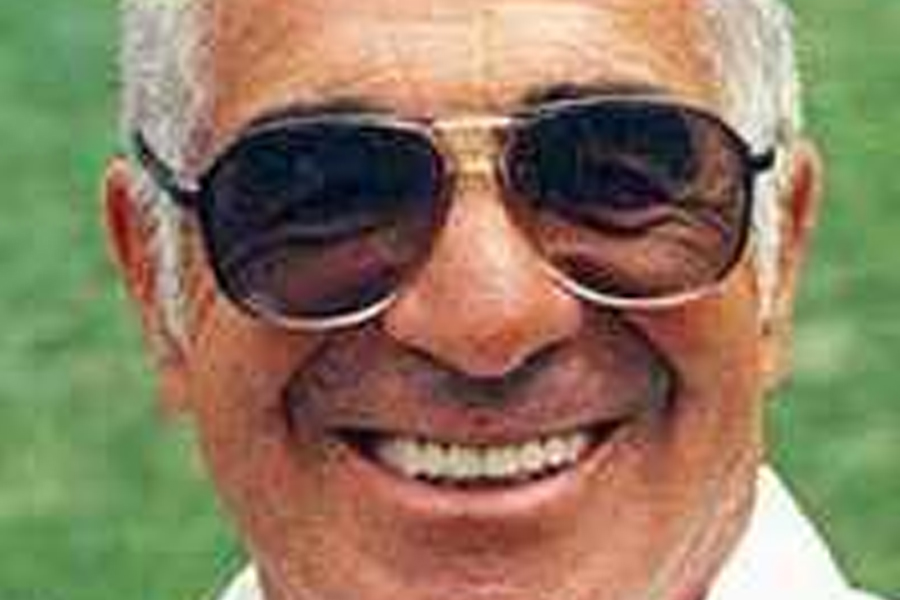
A family story rooted in New York
When I look at Henry Matthow, I do not see a public celebrity chasing the spotlight. I see something more elusive and, in some ways, more human: a man shaped by immigration, labor, family strain, and steady work in New York City. Henry Matthow was born on July 14, 1918, in New York City, and he lived most of his life far from the glare that later surrounded his younger brother, Walter Matthau. Henry belonged to a family whose story was built from movement, survival, and the long arithmetic of immigrant life.
His parents were Milton Matthow and Rose Matthow, both tied to the early 20th century world of working-class New York. Milton was an immigrant father whose life was marked by labor and responsibility, while Rose carried the heavier domestic burden after the family changed course. Together, they formed the deep root system of the Matthow household. Henry grew up in that soil, alongside Walter, and the family’s story is one of pressure and persistence, like a candle burning through a long winter night.
Henry Matthow’s place in the family
Henry was the older brother in the Matthow family, and that detail matters. In many families, the eldest child becomes a silent pillar. Henry appears to have been exactly that kind of person. He never became the public face of the family, but he remained part of its structure.
His brother Walter Matthau became the best known member of the family, later celebrated as a major American actor. Yet Walter’s fame should not eclipse Henry’s place in the family history. Henry was the brother who came first, the one born into the household before the better known name took shape. He is often remembered through Walter, but Henry had his own lane, his own work, and his own household.
Milton Matthow, Henry’s father, was born in 1879 and married Rose in 1917. His life ended in 1935, when Henry was still young. That loss likely changed the family’s center of gravity. Rose Matthow, born in 1894, lived much longer and appears to have been the steadying force after Milton’s death. In a family like this, the mother often becomes both anchor and bridge, holding the past in one hand and the future in the other.
Milton Matthow, the father
Milton Matthow stands at the beginning of the family story. He was an immigrant father, a man tied to work and the daily grind of making a life in New York. Accounts describe him as an electrician and peddler, which suggests a life of practical labor rather than privilege. He married Rose in 1917, and together they started the family that would include Henry and Walter.
Milton’s death in 1935 mattered. A father’s absence in a working family is not only emotional. It can also alter income, home stability, and the way children grow into adulthood. For Henry, that meant entering adulthood with a family history already marked by hardship. Milton’s life seems to have left behind not wealth, but a pattern of endurance. That kind of inheritance can be more lasting than money.
Rose Matthow, the mother
Henry’s family is most stable with Rose Matthow. Lithuanian immigrant and garment worker born in 1894. She worked in sweatshops and textile factories, where pay was low but demands were high. Her life was unadorned. It was required.
Rose appears to have continued the family after Milton’s death. I see her as the family door’s hinge. She raised Henry and Walter through terrible times and kept the family story going when the father died. Her role was fundamental, not flashy. Our Matthow family narrative would not exist without Rose.
Walter Matthau, the famous younger brother
Walter Matthau was Henry’s younger brother and later became a widely known actor. His fame makes him the easiest Matthow family member to find in the public imagination. That fame also throws Henry into sharper relief, because the contrast between them is so striking. One brother became a recognizable face in film and theater, while the other remained a businessman with a quieter public footprint.
Walter’s success does not erase Henry’s significance. Instead, it makes Henry feel like the shadow line behind the brighter figure. Families often work that way. One person becomes visible, while another does the quieter labor of living a full life outside the marquee. Henry was part of Walter’s origin story, but he was also his own man.
Ruth Matthow, Henry’s wife
Henry’s wife was Ruth Ann Matthow, also listed in some family records as Ruth Cohen Matthow. She was born in 1925 and died in 2009. Their marriage appears to have taken place around 1951 or 1952. That places Henry in his early 30s when he married, which suggests a settled, adult life rather than a rushed youthful one.
Ruth seems to have been the partner in a long domestic life, one that ran parallel to Henry’s work and family obligations. In family history, spouses are sometimes reduced to a line on a page. That is too small a frame. A spouse is often the one who sees the private version of a person, the one who knows the habits, silences, and small repeat gestures that never reach the public record.
Children and household life
Henry and Ruth are associated with at least two children: Dana Michael Matthow and Michelle Denise Matthow. These names matter because they show that Henry was not only a brother and husband, but also a father, someone whose line continued into another generation.
A father’s life is often measured in the rooms he helps shape. Children remember tone, routine, discipline, humor, and absence. Even when public records are sparse, the existence of children tells me that Henry’s life extended beyond business and genealogy. He had a home. He had obligations. He had the ordinary weight of raising a family in midcentury New York.
Career and working life
One of Henry Matthow’s most evident themes is his career. He wholesaled Army and Navy apparel and camping gear on Lower Broadway in New York City. Practical commerce requires knowing customers, inventories, scheduling, and the city pulse. His decades of experience speak louder than a job title.
I imagine him at a warehouse or store with racks, cartons, and trade lingo. Neither velvet rope nor stage lights. Products, customers, and business continuity. Work like that can become a life. Even with ledgers instead of chisels, it’s craftsmanship. Durability was his feat. Henry appears reliable in a city that reinvents itself.
Dates that shape the story
The Matthow family timeline carries the marks of immigration and survival. Milton and Rose married in 1917. Henry was born on July 14, 1918. Walter followed in 1920. Milton died in 1935. Henry reached adulthood during a changing New York, worked his way into a business life, married Ruth around 1951 or 1952, and died in May 1995 in Long Beach, New York.
Those dates are more than markers. They are the bones of a life. Between them lies a century of pressure and adaptation. Henry’s story is not dramatic in the Hollywood sense, but it is solid, and I find that compelling. It has the texture of old brick and worn wood, not marble.
FAQ
Who was Henry Matthow?
Henry Matthow was a New York born businessman and the older brother of actor Walter Matthau. He lived from 1918 to 1995 and spent much of his life outside the public spotlight.
Who were Henry Matthow’s parents?
His parents were Milton Matthow and Rose Matthow. Milton died in 1935, and Rose remained a central family figure for many years.
Was Henry Matthow married?
Yes. He was married to Ruth Ann Matthow, also identified in some records as Ruth Cohen Matthow.
Did Henry Matthow have children?
Yes. He is associated with at least two children, Dana Michael Matthow and Michelle Denise Matthow.
What did Henry Matthow do for work?
He worked in wholesale business in Lower Broadway, New York City, dealing in Army and Navy clothing and camping goods.
How is Henry Matthow connected to Walter Matthau?
Henry was Walter Matthau’s older brother. Walter became the more famous family member, but Henry remained part of the family foundation and history.